
Post #3 - More Than Storage
As we head into the middle of June my work here at MDHS continues to expand with new projects and opportunities. One such project has been the opportunity to work closely with Nancy Warr, a member of the Collections Committee at MDHS. Together, we have been focused on a major collections project involving over 100 artifacts that returned to the Burritt’s Rapids Archives following the Blockhouse Refresh. While these objects had finally made their way back home, each one required significant work before it could be properly rehoused and reintegrated into the collection. Every artifact needed updated catalogue information, including new location records, revised descriptions, and detailed condition reports documenting any signs of wear or damage.


One of the most important parts of this process was photography. Many of the original images in the database were outdated or unclear so every object was carefully re-photographed in a controlled setting using natural lighting and neutral backgrounds. The difference these new photographs made was incredible. The artifacts are now much more clearly documented, allowing their details and craftsmanship to be fully appreciated. Updating these images was important not only for internal records management, but also for public accessibility. Since the MDHS database is available online through the society’s website, visitors can now explore these artifacts digitally with much clearer and more professional photographs. It is rewarding to know that the work being done behind the scenes directly improves how the public experiences and connects with local history.
Once the digital records were complete, the physical work of rehousing the artifacts began. Each object was carefully wrapped, packed for long-term storage, and assigned a new home location within the archives. This process came with its own challenges because many of these artifacts had previously been permanently displayed at the Blockhouse and had never actually been stored within the archives before. As a result, we needed to create entirely new storage solutions and make room for a large influx of incoming material. This naturally led to another major undertaking: the re-organization of the MDHS Archives. Just before my contract began in May, the MDHS team acquired additional space at the Burritt’s Rapids Community Hall in a room adjacent to the existing archives. Prior to my arrival, the room had been fully renovated and transformed into a functional workspace and meeting area. Since then, it has also become an essential part of the archive’s expansion process.

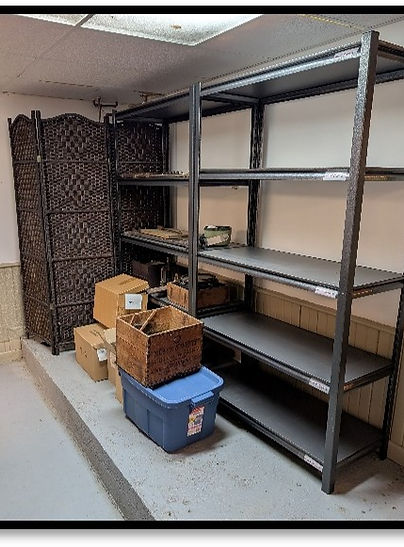
The new space has allowed us to temporarily house artifacts while areas of the archives are cleaned, reorganized, and optimized for storage. Although the archives currently look a little chaotic, it is very much a work in progress, and the improvements are already becoming noticeable. Shelving and workspaces that were previously cluttered or underused are gradually being reorganized, making the archives more functional not only for the collection itself but also for the staff and volunteers who work within the space. It has been exciting to watch the archives slowly evolve into a more accessible environment.
Another valuable learning opportunity that I was gratefully allowed to participate in was the deaccessioning process for several items that no longer met MDHS standards. Under the society’s Collections Management Policy, these particular objects had been displayed at the Blockhouse for over a decade. Unfortunately, their condition had deteriorated to the point where they posed a potential risk to staff, volunteers, visitors, and even other artifacts within the collection. Because they were unstable, potentially hazardous, and beyond repair, the difficult decision was made to formally remove them from the collection. Although deaccessioning can seem like a negative process at first glance, it is actually a very important part of responsible collections management. Once the decision had been approved, the records for these items were updated and permanently preserved digitally in PastPerfect, ensuring that documentation of the objects remains within the MDHS database even after the physical items themselves are no longer part of the collection.
Alongside the in-person archival work, I also continued developing and finally completed the Second Floor Accessibility Binder remotely. This bilingual, sixty-page resource has been designed to improve accessibility for visitors to the Blockhouse Museum, particularly for those who may not be physically able to access the second-floor exhibits. The binder is divided into ten sections and provides detailed information about the upstairs displays, artifacts, and the history of the Blockhouse itself. This updated version greatly expands upon the previous binder by including more contextual information, exhibit descriptions, and high-quality photographs of the artifacts on display. The goal was to create a resource that allows every visitor to fully engage with the museum experience regardless of mobility limitations. Accessibility within museums is incredibly important, and this binder is intended to ensure that no part of the Blockhouse experience feels out of reach.
If you visit the Blockhouse Museum this season, we highly encourage you to take a look through the accessibility binder. It was created with visitors in mind and serves as a valuable companion to the exhibits, offering a deeper understanding of the artifacts and stories that make the Blockhouse such an important part of Merrickville’s local history.
Mercedes Hunter